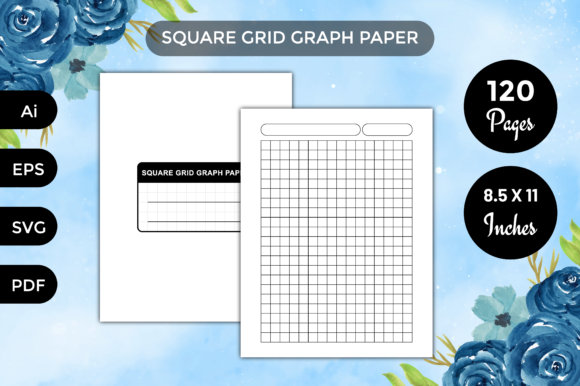
The Precision Tool You Didn't Know You Needed: The Isometric Graph Paper Book
In a digital age saturated with software and screens, there is a quiet resurgence of analog tools that offer tangible clarity and unimpeded creative flow. Among these, the Isometric Graph Paper Book stands out not as a nostalgic relic, but as a sophisticated, purpose-built instrument for modern visualization. It transcends the simple grid, offering a three-dimensional framework on a two-dimensional page, enabling engineers, architects, artists, and students to sketch, plan, and design with volumetric precision directly from their minds onto paper.
Beyond the Grid: Understanding Isometric Projection
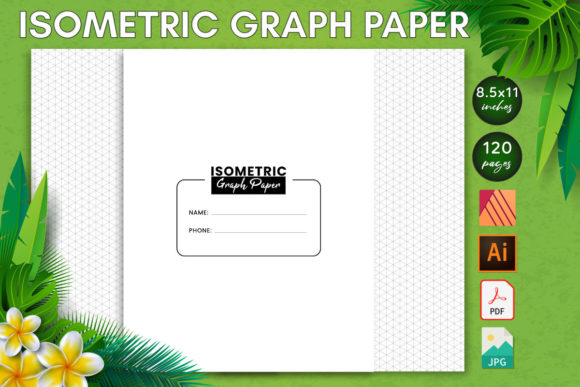
Traditional graph paper uses a Cartesian grid of perpendicular lines, perfect for plotting 2D graphs and charts. Isometric graph paper, however, employs a grid of equilateral triangles or a series of lines at 30-degree angles. This creates a uniform, three-axis system (X, Y, Z) that maintains equal scales along each axis. When you draw on this paper, you are effectively creating a isometric projection—a technical drawing method where the three dimensions are represented without perspective distortion, allowing measurements to be taken directly from the drawing. This makes the Isometric Graph Paper Book an essential bridge between freeform sketching and formal technical drafting.
Alignment with Modern Professional and Creative Trends
The relevance of this specialized tool is amplified by several converging trends. First, the demand for rapid prototyping and conceptualization across industries. Before a 3D model is rendered in CAD software, before a building's digital twin is created, there is often a need for a quick, accurate hand-drawn sketch to capture the initial idea. An Isometric Graph Paper Book for engineers, architects, artists, 3D designers, and students serves as this first capture device, fostering clarity and minimizing iterative errors in the digital phase.
Secondly, there's a growing appreciation for hybrid workflows. Professionals are increasingly blending analog and digital tools to optimize different stages of their process. Sketching on isometric paper provides an unconstrained, tactile thinking space, free from software interfaces and dropdown menus. This sketch can then be scanned, traced, or used as a direct reference within digital environments, creating a seamless pipeline from physical insight to digital execution.
Furthermore, in education and personal development, there's a focus on building foundational spatial reasoning skills. For students in STEM, design, or art, manually constructing 3D shapes and systems on isometric paper develops an intuitive understanding of geometry, scale, and structure that pure screen-based learning sometimes fails to instill.
Practical Applications: Where the Book Comes to Life
- Engineering & Product Design: Initial component layouts, mechanism ideation, and ergonomic studies are often quicker to explore with pen and isometric grid, allowing for immediate volumetric assessment.
- Architecture & Interior Design: Quick spatial studies, furniture layout in 3D, and simple structural forms can be drafted with accurate proportional relationships, aiding client communication and early-stage planning.
- Art & 3D Design: Concept artists and illustrators use it to construct accurate environments and objects before detailing. Pixel artists and game designers use it for planning 3D-like structures in 2D media.
- Education & Learning: From teaching basic geometry to advanced technical drawing, the book provides a structured yet flexible canvas for students to master 3D representation.
- Personal Projects & Planning: Even for hobbyists planning a workshop layout, a custom shelving unit, or a complex craft project, the isometric grid brings order and accuracy to DIY plans.
The Shift in Needs: Why a Dedicated Book Format Matters
While single sheets of isometric paper exist, the curated Isometric Graph Paper Book format answers evolved user expectations. Professionals and creators need reliability, portability, and volume. A book ensures:
- Consistent Quality: Every page is uniform, with a precise, non-distorting grid printed at high resolution (300 DPI).
- Workflow Integrity: Having a dedicated book keeps all related sketches in one sequential, portable location, improving project organization.
- Professional Presentation: For client meetings or team collaborations, sketches in a bound book appear more coherent and deliberate than loose sheets.
The availability of the book in a PDF for instant download, with formats like 8.5×11 inches including bleed settings, speaks directly to the creator economy. Entrepreneurs and freelancers can immediately access a print-ready product to publish on platforms like Amazon KDP, while the inclusion of editable original files (.afpub, .ai) allows for customization and branding, turning a tool into a tailored product.
Connecting to Larger Developments
The value of the Isometric Graph Paper Book is part of a broader movement toward specialization and customization of tools. As professions become more niche and interdisciplinary, generic tools become less effective. This book represents a targeted solution for a specific, high-value need—3D visualization on paper. It also aligns with the growth of the independent publishing and digital product market. The ready-to-upload PDF format empowers designers, educators, and professionals not just to use the tool, but to become distributors of it, adding value to their own communities.
Ultimately, it underscores that efficiency isn't solely about digital speed. Sometimes, efficiency is about cognitive clarity. The structured space of an isometric grid reduces the mental load of constructing 3D ideas, freeing the user to focus on innovation and problem-solving. This makes the Isometric Graph Paper Book not just a pad of paper, but a calibrated environment for thought, a testament to the enduring power of well-designed physical media in our increasingly digital world.