The Gratitude Journal Built for Young Minds
In a world often overwhelming for young people, fostering resilience and a positive mindset is more crucial than ever. A GRATITUDE JOURNAL for TEENS KIDS isn't merely a notebook; it's a specially designed tool that empowers children and adolescents to navigate their emotions, build self-awareness, and cultivate a habit of looking for the good. This isn't about complex psychology—it's about providing a simple, tangible space for daily reflection that fits seamlessly into their lives.
Why a Dedicated Journal for Teens and Kids Works
Generic journals can feel intimidating or irrelevant to younger users. The GRATITUDE JOURNAL for TEENS KIDS addresses this by considering the specific needs and perspectives of its audience. For a teen, journaling might be a private outlet amidst social pressures. For a kid, it could be a guided activity that makes sense of their day. The core utility lies in its focus: channeling the natural practice of gratitude into a structured, yet flexible, routine that encourages emotional literacy without feeling like homework.
The act of writing down what they're thankful for—from a fun afternoon with friends to mastering a new skill—helps young people externalize positive thoughts. This repeated focus can shift neural pathways, gradually making a positive outlook more automatic. For educators and parents, introducing such a tool is a proactive step in supporting mental well-being, offering a constructive alternative to digital distractions.
The Ideal Interior: Designed for Engagement, Not Intimidation
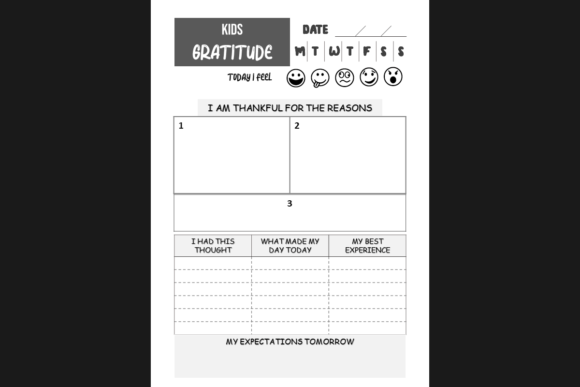
The interior of an effective gratitude journal for this age group is critical. It must be inviting, not austere. The ideal layout avoids dense, blank pages that can seem daunting. Instead, it might feature gentle prompts or open-ended questions that spark thought without dictating it. Examples include simple starters like "Today, a person who made me smile was..." or "Something I learned that was cool...". This structure provides a scaffold, especially for beginners, while leaving ample room for freeform expression as confidence grows.
Over 120 sheets provides substance—it signals a long-term companion, not a fleeting gadget. This volume allows for several months of daily use, building the habit into a rhythm. The interior paper quality should be pleasant to write on, encouraging the tactile experience that separates this practice from typing on a screen.
Key Characteristics and Practical Strengths
The GRATITUDE JOURNAL for TEENS KIDS often excels in its physical dimensions and user-centric design. The 6x9 size is a notable strength. It's large enough to feel substantial and allow for comfortable writing, yet compact enough to fit easily into a school backpack, a bedside drawer, or a travel bag. This portability ensures the journal can be part of their daily environment, whether at home, in a classroom, or on a trip.
- Accessible Entry Point: The focused theme of gratitude lowers the barrier to journaling. It's not about writing a memoir; it's about noting a few specific things each day.
- Builds a Tangible Record: Over time, the filled pages become a personal archive of positive experiences, which can be incredibly affirming to revisit during tougher moments.
- Encourages Mindfulness: The daily practice naturally pulls attention away from passive scrolling and towards active, reflective thinking.
- Non-Digital Engagement: It offers a screen-free activity that strengthens writing skills and provides a private space free from notifications and algorithms.
Applications Beyond the Personal Page
The utility of this tool extends into various environments. In educational settings, teachers might incorporate the GRATITUDE JOURNAL for TEENS KIDS as a quiet, individual activity to start or end the day, promoting a calmer classroom atmosphere. Therapists and counselors can use it as a supportive tool for clients, providing a simple framework for positive focus between sessions.
For creators, parents, or mentors, the journal can be part of a larger toolkit for youth development. It’s a practical item that supports broader goals of building emotional intelligence and resilience. In a commercial or branding context, a well-designed gratitude journal can be a meaningful product that aligns with values of wellness and positive psychology, appealing to a market of conscious consumers looking for substantive gifts for younger family members.
Evaluating and Implementing the Journal Effectively
Selecting the right gratitude journal for a teen or child involves a few practical considerations. First, assess the interior prompts. Are they open and age-appropriate? They should inspire, not constrain. The physical build quality matters—a sturdy cover and binding that can withstand being carried around signifies durability. The 6x9 dimension is ideal, but ensure the feel of the book is appealing; the aesthetics should resonate with the young user to encourage ownership.
When introducing it, frame it as a personal tool, not an assignment. Allow complete ownership over what is written and when. For younger kids, a shared discussion about their entries can be enriching, but for teens, privacy is often paramount. The key to successful implementation is linking it to a consistent, low-pressure routine—perhaps five minutes before bed or after school.
Recommendations for use include starting with a trial period. Encourage filling one page a day for a week to experience the flow. Observe if the prompts are helpful or if more free space is desired. The over 120 sheets offer room for experimentation, allowing the user to find their own rhythm without the pressure of "wasting" pages.
The Cumulative Benefit: A Habit of Positive Focus
The true value of the GRATITUDE JOURNAL for TEENS KIDS unfolds over weeks and months. The benefit isn't in a single entry, but in the cumulative practice of scanning one's day for moments of appreciation. This habit can enhance communication, as it fosters a more positive internal dialogue which often translates into kinder external interactions. From a user experience perspective, the journal's design—when it's right—removes friction, making the positive practice feel natural and rewarding.
Ultimately, this specialized journal is more than a product; it's an invitation to a practice. It provides a structured yet personal space for young minds to cultivate an outlook that can bolster their resilience, creativity, and overall well-being as they grow. By choosing a tool thoughtfully designed for their world, you provide not just a notebook, but a potential catalyst for a healthier, more reflective mindset.