Understanding The Big Sister Gnome: A Crafters' Digital Asset Evaluation
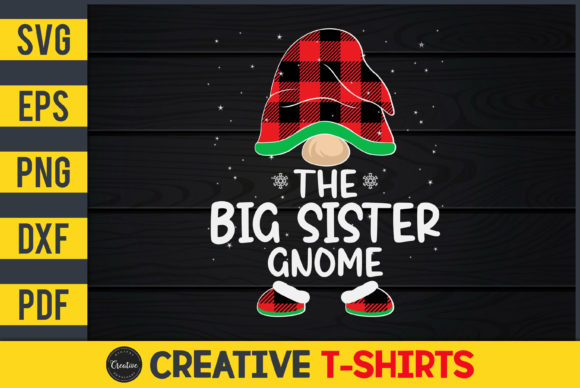
In the expansive market of digital craft designs, specific files become noteworthy not just for their aesthetic appeal, but for their utility, format compatibility, and application scope. The Big Sister Gnome represents a clear example of such a digital asset. It is a standalone graphic design, typically offered as a bundled set of vector and raster files, centered around a gnome character with a "big sister" thematic element. Unlike a physical product or a singular static image, its core value lies in its adaptability. You receive a zipped folder containing the design in multiple formats: SVG, DXF, PNG (with a transparent background), PDF, and EPS. This multi-format approach is a significant characteristic, distinguishing it from vendors who might offer only one or two file types.
Key Characteristics and Distinct Format Considerations
What makes The Big Sister Gnome distinct begins with its intended use case: it is a print-ready file for cutting machines like Cricut and Silhouette. The SVG format is crucial here, as it is a vector file that allows these machines to read and execute precise cuts without loss of detail at any scale. The inclusion of DXF, another vector format favored by some software, broadens machine compatibility. However, the other included formats serve different purposes. The PNG file provides a ready-to-use raster image for digital projects or simple prints, while the PDF and EPS files are often preferred for professional printing or further graphic editing in advanced software.
When evaluating this against similar digital design offerings, the format bundle is a primary point of comparison. Many designers offer SVG and PNG only. The addition of PDF, EPS, and DXF here suggests a focus on serving a wider audience, from hobbyists using simple cutting software to small business owners needing files for commercial print equipment. A tradeoff, common to all digital downloads, is that the user must have the appropriate software to manipulate these files (like Adobe Illustrator for EPS, or a cutting machine software for SVG). The Big Sister Gnome doesn't include the software itself; its utility is entirely dependent on the user's existing tools.
Evaluating Application Scope and Project Fit
The described applications—from T-shirts and mugs to scrapbooking and wedding supplies—highlight its versatility. This is a strength, but it also requires a realistic assessment of project needs. For a crafter looking to create a one-off gift, like a personalized pillow, the transparent PNG might be sufficient for basic heat transfer. However, for someone aiming to produce a batch of items for a craft fair, the scalable vector files (SVG, EPS) are invaluable for maintaining quality across multiple sizes and materials.
Let’s consider a practical comparison. Suppose your project involves intricate detail on a small ceramic ornament. The vector precision of The Big Sister Gnome SVG file would be superior to a generic JPEG found on some stock image sites, which would pixelate when resized. Conversely, if your need is simply for a digital clip art to use on a website banner, the PNG might be perfectly adequate, and you might not require the other formats at all. This illustrates a key decision factor: matching the file formats you actually need to the bundle offered. Purchasing a multi-format bundle when you only need one type of file could be less efficient, though it does offer future flexibility.
Strengths in Business Expansion and Limitations to Note
A stated benefit is expanding a small craft business with a "unique and exclusive design." The uniqueness is subjective and depends on market saturation of gnome-themed designs. The strength here is that once purchased, the files can be used to create physical products for sale, which is a common practice. However, it's vital to understand the typical license. Most such digital files are for personal and limited commercial use; they are not usually trademarked characters you can brand endlessly. The limitation is that you are not buying an exclusive copyright, but a license to use the design. Your business expansion relies on your craftsmanship and market, not on sole ownership of the gnome image.
Compared to other resources, like subscribing to a monthly clip art service or using free public domain vectors, The Big Sister Gnome is a one-time purchase for a specific design. This is advantageous if this exact motif fits your product line perfectly. If, however, you need a constantly refreshed library of diverse images, a subscription service might be a better alternative. The tradeoff is between depth and breadth: you get multiple formats of one design here, versus many designs in possibly fewer formats from a service.
When The Big Sister Gnome Is the Right Choice
This digital file set is likely a strong fit under several conditions. First, if you are a crafter who routinely uses a cutting machine and values having both vector and raster versions for different projects. Second, if the "big sister" theme aligns with a specific product niche or gift occasion you are targeting. Third, if you prefer the certainty of a one-time purchase over ongoing subscriptions. Finally, if your workflow involves multiple software platforms (e.g., using Illustrator for design and then a cutter software for production), the EPS and SVG combo becomes highly practical.
When You Might Need an Alternative Option
There are scenarios where another option may be more suitable. If you are a beginner with no cutting machine and only intend to print the design on standard paper for cards, a simpler, cheaper PNG-only file from another seller might suffice. If you seek a highly customizable design where you can easily alter core elements (like changing the gnome's clothes), you might need a more modular graphic or a design offered in a format compatible with specific layering software, which isn't guaranteed here. Also, if your project requires a 3D model or a physical template, this digital 2D file set is not the correct category of product.
Making an Informed Decision on Digital Craft Assets
Choosing a resource like The Big Sister Gnome ultimately hinges on a clear assessment of your tools, end products, and business model. Evaluate the software you own: can it open EPS or DXF files? Consider your output: are you making fabric cuts, vinyl decals, or paper crafts? Each format has a best-fit application. Furthermore, think about scalability. The vector formats allow resizing without quality loss, a critical factor for product lines that include items from small pins to large banners.
In the broader category of digital craft files, this offering sits in the middle ground between ultra-specialized, machine-specific files and generic clip art. Its bundled format approach attempts to cover many bases, which is helpful for users with diverse project needs but may be redundant for those with singular, focused workflows. By understanding the distinct role of each file type—SVG for cutting, PNG for digital use, EPS for professional editing—you can better judge whether this particular bundle aligns with your craft requirements or if a more tailored alternative from another provider would achieve your goals more effectively.