The Mental Health Journal: A Practical Tool for Wellness and Business
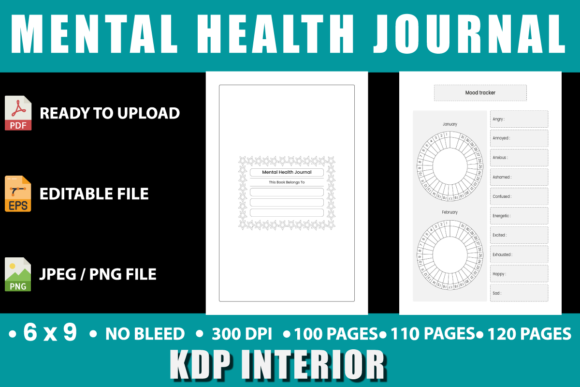
In recent years, the practice of journaling has emerged as a powerful, accessible tool for managing mental wellbeing. For many, however, the hurdle isn't the commitment to write, but finding the right structure to begin. The Mental Health Journal, offered as a ready-to-use 6" x 9" book interior, addresses this need directly. It serves a dual purpose: as a guided space for personal reflection and as a professionally designed product for entrepreneurs looking to enter the self-publishing market, particularly through platforms like Amazon KDP.
Common Misunderstandings About Ready-to-Publish Journal Interiors
A significant mistake many newcomers make is underestimating the importance of a truly "ready-to-upload" product. The term often implies a file that is technically complete, but the devil is in the details. The Mental Health Journal package provides PDF, JPEG, and editable AI files, which is a crucial combination. Beginners might overlook the AI (Adobe Illustrator) file, seeing it as just another format. However, this editable file is the key to customization. Without it, you are locked into the exact design provided. If you wish to adjust prompts, change fonts, or personalize the layout for a specific audience niche, having the source file is indispensable. Attempting to edit a PDF or JPEG for professional resale often leads to degraded quality and a product that feels amateurish.
Overlooking Print Specifications and User Experience
Another frequently overlooked detail is the specification of "No Bleed." Bleed refers to printing where the design extends beyond the page's edge to ensure no white borders after trimming. A "No Bleed" design like this one is intentionally formatted for simplicity and cost-effectiveness, perfect for standard journals. A mistake would be trying to force a bleed onto this design without adjusting the layout, which would require significant graphic work. More importantly, users should focus on the interior experience. This journal's dimensions (6" x 9") are a popular, comfortable size, but a common error is not considering page count in context. The offering of 100, 110, and 120 pages provides choice. Selecting the lowest page count to minimize cost might result in a journal that feels too brief for a user seeking a long-term companion. Conversely, a 120-page journal might be perfect for a deep, monthly practice.
The Pitfall of Skipping Quality Checks Before KDP Upload
The features highlight that the files have been tested on KDP. This is a vital step that many creators bypass, leading to frustrating rejections or publishing delays. A better approach is to use the provided high-quality print-ready PDF as your primary upload file, but always conduct your own final preview using KDP's digital tools. Check every page in the online previewer for formatting oddities—ensure margins are consistent, and that any placeholder text or prompts appear correctly. A realistic example of a poor decision is uploading the JPEG files directly because they seem easier to handle. JPEGs are rarely ideal for full-book interiors as they can compress text quality, whereas the PDF is engineered for crisp, clean printing.
Misjudging the Market and Audience
When evaluating the Mental Health Journal for business use, a common oversight is treating it as a generic product. The journal is specifically a mental health journal. Its prompts and structure are designed to facilitate reflection on emotions, gratitude, stressors, and goals. A mistake would be to market it vaguely as a "daily diary" without emphasizing its therapeutic angle, thereby missing its core audience: individuals actively seeking tools for mindfulness, anxiety management, and self-care. Your customization, facilitated by the AI file, should enhance this specificity, not dilute it. For instance, you could tailor prompts more toward career-related stress for a professional audience or add sections for tracking mood and sleep patterns.
Practical Advice for Using and Customizing the Journal
To avoid these pitfalls, adopt a methodical approach. First, decide your primary goal: personal use or business resale. For personal use, download the PDF or print the JPEG pages directly. The structure is there to serve you, so don't feel pressured to fill every prompt daily; use it flexibly.
For KDP entrepreneurs, follow this practical workflow:
- Audit the Files: Immediately open all provided files (PDF, JPEG, AI) to understand what you have. Verify the AI file is genuinely editable in your software (Adobe Illustrator or compatible vector program).
- Plan Customizations Before Editing: Decide on changes upfront. Do you want to rebrand it? Change the title font? Add a few unique prompts? Map this out to avoid endless, inefficient tweaking.
- Use the Correct File for Upload: After any customization, generate a new print-ready PDF from your edited AI file. This PDF should be your final upload to KDP, not the JPEGs or the original PDF.
- Consider Complementary Products: Think beyond a single journal. This interior could be the base for a series: a Mental Health Journal for Students, for New Parents, for Professionals. The editable file makes this scalability possible.
What to Check Before Making Your Decision
Before purchasing or downloading this Mental Health Journal interior, ask yourself a few key questions. Do you have the basic graphic design skills or access to software (like Adobe Illustrator) to utilize the editable AI file? If not, the pre-made PDF is still excellent, but your ability to differentiate your product will be limited. Assess the page count options against your target user's needs. Also, review the design aesthetics—does the current layout align with the visual tone you want to project? Simple, clean journal interiors have broad appeal, but if your niche audience expects highly artistic pages, customization will be necessary.
Ultimately, this product bridges a gap. It provides a thoughtful, structured tool for individuals prioritizing their mental wellness, while also offering a legitimate, tested foundation for a small business venture. By avoiding the common mistakes of ignoring file utility, skipping quality checks, and misaligning the product with its market, you can leverage this journal interior effectively—whether for your own personal growth or for building a credible offering in the expansive world of self-publishing. The key is to approach it with attention to detail and a clear understanding of its dual-purpose potential.