A Modern Daily Productivity Plan for Focused Achievement
In a world of constant notifications and competing priorities, the simple act of planning your day can feel like a revolutionary act. A structured Daily Productivity Plan is more than a list of tasks; it’s a commitment to intentional action. It provides a clear framework to capture goals, prioritize efforts, and track progress, transforming chaotic energy into directed momentum.
For professionals, creators, and entrepreneurs, this isn’t about filling every minute with work. It’s about creating space for what truly matters—both in your career and personal life. By visually mapping out your day, you gain control over your time, reduce decision fatigue, and create a tangible record of your accomplishments.
The Anatomy of an Effective Daily Planner
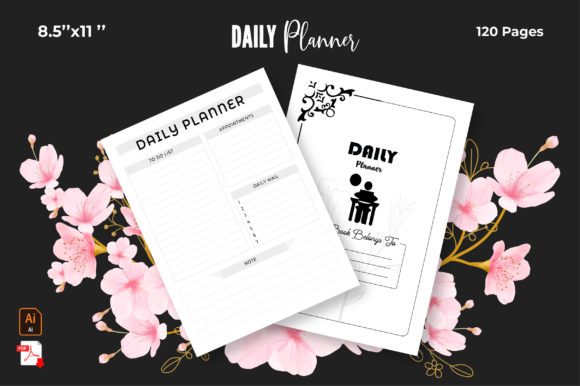
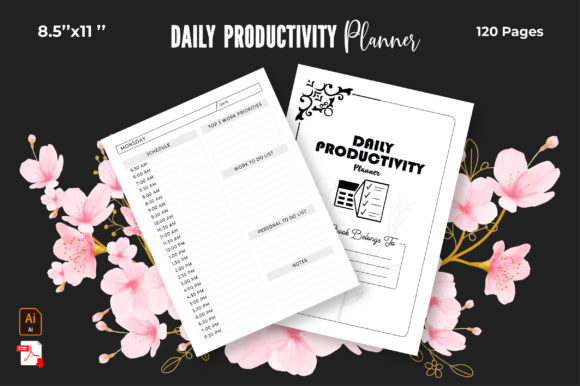
What separates a generic notebook from a purposeful Daily Productivity Plan? Specific design elements crafted for utility. A well-constructed planner typically includes dedicated sections for daily goals, time-blocked schedules, priority task lists, and space for notes or reflections.
Consider the physical specifications: an 8.5” x 11” inch format offers ample writing space without being cumbersome. A 120-page count provides substance for sustained use, whether for a quarter of dedicated work or a full personal project lifecycle. When such a planner is offered as a ready-to-use KDP interior—including JPEG, PDF, and editable Adobe Illustrator files—it becomes a versatile tool. You’re not just buying a template; you’re acquiring a customizable foundation for your own productivity system or commercial product.
Key Strengths: Structure Meets Flexibility
The notable quality of a professional Daily Productivity Plan template lies in its balanced rigidity and adaptability. The structure prevents planning from becoming a vague, wasted exercise, while the customizable nature allows it to serve diverse needs.
- Ready for Implementation: Being pre-formatted and tested for platforms like KDP means it eliminates technical hurdles. You can focus on content and use, not layout design.
- Visual Clarity: Clean sections guide the user naturally from goal-setting to execution, improving the likelihood of follow-through.
- Commercial Ready: For bloggers, publishers, and business owners in the low-content space, it’s a product ready for branding and immediate upload, turning a tool into a viable business asset.
Practical Applications Across Diverse Fields
The utility of a daily planner template extends far beyond a corporate office. Its design serves as a neutral canvas applicable to almost any endeavor requiring focused time management.
For educators and freelancers, it can map out project phases, client work blocks, and administrative tasks, preventing overlap and missed deadlines. Creatives and hobbyists can use it to dedicate time to skill development or passion projects, ensuring these pursuits aren’t sidelined by daily chores. In digital and marketing roles, it’s ideal for plotting content calendars, campaign steps, and analytics review sessions, creating consistency in often reactive fields.
Perhaps one of the most powerful applications is in personal capacity building. Using a Daily Productivity Plan to schedule not just work tasks, but also periods for learning, exercise, or family time, reinforces that productivity encompasses overall life quality.
Real-World Use Cases and Observations
Imagine a freelance graphic designer using the planner’s time blocks: 9–11 AM for client project A, 11–12 PM for invoicing and admin, 1–3 PM for project B, and 3–4 PM dedicated to skill-upgrading via a tutorial. This visual segregation prevents project bleed and creates a predictable workflow.
An entrepreneur launching a small product might use the goal section for daily micro-targets: “finalize packaging design,” “contact three potential distributors,” “draft social media posts.” The notes section then captures insights from conversations or ideas for iteration. The planner becomes a central log for the entire launch journey.
A common observation among users of structured plans is the reduction of morning anxiety. Knowing your day is already mapped provides a sense of control from the start. It also creates a natural stopping point, as completing the planned list signals a shift to rest, combating overwork.
Evaluating and Implementing Your Planner
Selecting or using a Daily Productivity Plan effectively requires aligning it with your actual working style. Consider these practical points.
Assess Your Flow: Do you work best in rigid hourly blocks or with more flexible to-do lists? Choose a template whose section prominence matches your style. The beauty of an editable file is you can adjust this over time.
Integration is Key: The planner should sit within your existing ecosystem. If you use digital calendars, your daily plan can serve as the detailed breakdown of broader calendar items. Treat it as the tactical companion to your strategic monthly goals.
Branding for Commercial Use: If you are a publisher utilizing the KDP interior for business, consider your audience. Customizing the template with your logo, color scheme, or additional inspirational quotes can transform a generic product into a branded experience that resonates with your specific customers.
Finally, commit to the review. The end-of-day notes section isn’t filler. Use it to note what worked, what didn’t, and why. This turns your Daily Productivity Plan into a living document that evolves with your improving efficiency, making it not just a record of your days, but a tool for your growth.
The Cumulative Benefit of Daily Direction
The ultimate benefit of consistently using a Daily Productivity Plan is compound growth. Each planned day builds on the previous one. Completed tasks build confidence. Clear priorities reduce stress. The visual history of 120 pages of achievement provides a powerful morale boost and a concrete dataset for evaluating your productivity patterns.
Whether you use it personally to master your time or professionally to create a product for others, its value lies in its fundamental premise: that a day, when given intention and structure, can be profoundly more effective and satisfying than one left to chance. Start planning not just your work, but your progress.