A Comprehensive Evaluation of the Cocktail Recipe Book KDP Interior
For creators entering the self-publishing arena on Amazon’s Kindle Direct Publishing platform, finding a reliable and professionally designed interior template can significantly streamline the production process. The Cocktail Recipe Book - KDP Interior represents one such resource, designed specifically for authors aiming to publish a cocktail recipe collection. This evaluation examines its features, practical application, and overall value for independent publishers.
Understanding the Product’s Core Purpose
The Cocktail Recipe Book - KDP Interior is not a physical book but a digital template file. It provides the pre-designed layout, page structure, and formatting necessary for the inside pages of a cocktail recipe book. By using this interior, a publisher can focus entirely on content creation—listing recipes, ingredients, and instructions—without needing advanced graphic design skills or spending hours on meticulous page setup. Its primary purpose is to offer a turnkey solution that ensures a consistent, print-ready product that meets KDP’s technical specifications.
Key Features and Technical Specifications
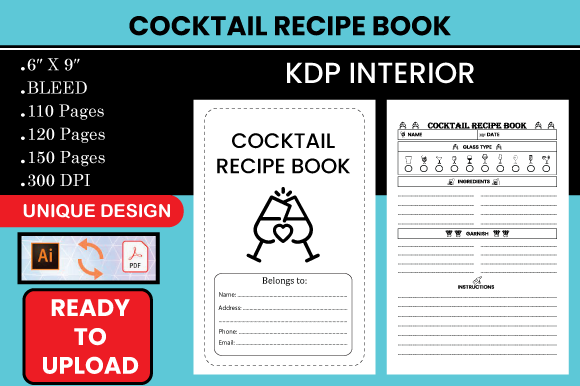
The advertised features highlight its practical design. The template comes in a practical 6x9 inch trim size, a popular dimension for cookbooks and recipe collections on Amazon. It offers multiple page count options: 110, 120, and 150 pages. This flexibility allows authors to scale their project based on the number of recipes they intend to include without manually adding or removing pages.
From a technical standpoint, the product provides both bleed and no-bleed file formats. This is crucial as it accommodates different design preferences—a full-cover background image that extends to the edge of the page requires a bleed file. All files are PDF format at 300 DPI, which is the standard resolution required for professional print quality on KDP. The claim that the files are “Print Ready” and have been tested on KDP suggests the provider has validated the templates against Amazon’s upload system, reducing the risk of technical rejection.
File Delivery and Customization Potential
Purchasers receive three PDF files alongside three AI files. The PDFs are immediately usable for upload if the content is added directly. The inclusion of Adobe Illustrator (AI) source files, however, is a significant strength. For users with access to Illustrator or compatible vector editing software, these files allow for deep customization. You can modify colors, fonts, graphic elements, and layout details to better align with a unique brand or aesthetic vision. This dual delivery caters to both the user who wants a quick, straightforward solution and the more advanced user seeking creative control.
Real-World Application and Usability Analysis
In practical use, the value of the Cocktail Recipe Book - KDP Interior becomes apparent during the manuscript preparation phase. An author compiling 80 classic and modern cocktail recipes can select the 120-page variant, ensuring ample space for introductions, indexes, and recipe pages. The pre-formatted layout likely includes dedicated sections for each recipe, with standardized places for the cocktail name, photo, ingredients list, step-by-step instructions, and perhaps notes or serving suggestions. This consistency is vital for reader experience; it makes the book easy to navigate and professional in appearance.
The reliability of a tested template cannot be understated. KDP’s upload process can be finicky, with strict requirements for margins, bleeds, and image quality. A template that has already passed these checks saves considerable time and avoids the frustration of repeated upload attempts and error messages. This reliability directly contributes to a smoother publishing workflow, allowing the creator to move from content completion to market listing more efficiently.
Identifying the Ideal User
This product is not for everyone. Its utility is highly situational and targets a specific niche within the broader KDP community.
- First-Time KDP Publishers: Individuals new to self-publishing who lack design expertise will find this template immensely helpful. It provides a clear path to a professional-looking product without a steep learning curve.
- Content-Focused Creators: Bloggers, bartenders, or hobbyists who have deep knowledge of cocktails but limited time for book design can leverage this interior to translate their expertise into a tangible product quickly.
- Entrepreneurs and Small Business Owners: Those looking to create a branded recipe book for a bar, restaurant, or hospitality business can use the customizable AI files to incorporate their logo and brand colors, creating a cohesive marketing asset.
- Freelancers and Service Providers: Graphic designers or publishing assistants who service authors might use such a template as a base to expedite client projects, modifying it as needed.
For a seasoned book designer or a publisher aiming for a radically unique, avant-garde layout, this standardized interior may be too restrictive. Its strength lies in offering a proven, conventional structure, not in groundbreaking design innovation.
Quality Considerations and Long-Term Value
The presumed quality of the Cocktail Recipe Book - KDP Interior hinges on its design execution and technical accuracy. A well-designed template should have balanced typography, harmonious spacing, and intuitive visual hierarchy. The 300 DPI PDF assurance suggests image areas within the template will render clearly in print. The long-term value is twofold. First, it serves as a one-time asset for a single book project. Second, for users who purchase the AI files, it becomes a reusable framework; understanding the layout structure can inform future projects, even if they are not directly cocktail-related.
A potential limitation, common to all pre-made templates, is a degree of genericness. If hundreds of publishers use the same base interior without customization, the market could see visually similar books. This is where the customizable AI files become critical—they provide the tool to differentiate. Furthermore, the template’ effectiveness is entirely dependent on the user’s content. Poorly written recipes or low-quality photos inserted into a beautiful template will still result in a subpar book.
Practical Recommendations for Potential Users
Before committing, evaluate your own needs and resources. Do you possess a collection of recipes ready for publication? Is your goal speed and convenience, or unique branding? If you have no intention to customize and simply need a container for your text, the PDF versions will suffice. If branding is important, ensure you have (or can hire someone with) the software and skill to edit the AI files.
- Match your estimated content volume to the correct page count variant to avoid a book that feels too sparse or overcrowded.
- Even with a print-ready file, always review KDP’s current guidelines before uploading, as requirements can occasionally update.
- Consider pairing this interior with a professionally designed cover that complements its internal style for a cohesive final product.
The Cocktail Recipe Book - KDP Interior stands as a pragmatic tool in the self-publishing toolkit. It addresses a clear need for a specialized, technically sound book layout, reducing barriers to entry for content creators. Its worth is measured not by exaggerated claims, but by its functional ability to convert a manuscript into a market-ready book interior reliably and efficiently. For the target audience—those who wish to publish a cocktail recipe book with a professional aesthetic without becoming experts in book design—it represents a considered and practical solution.